
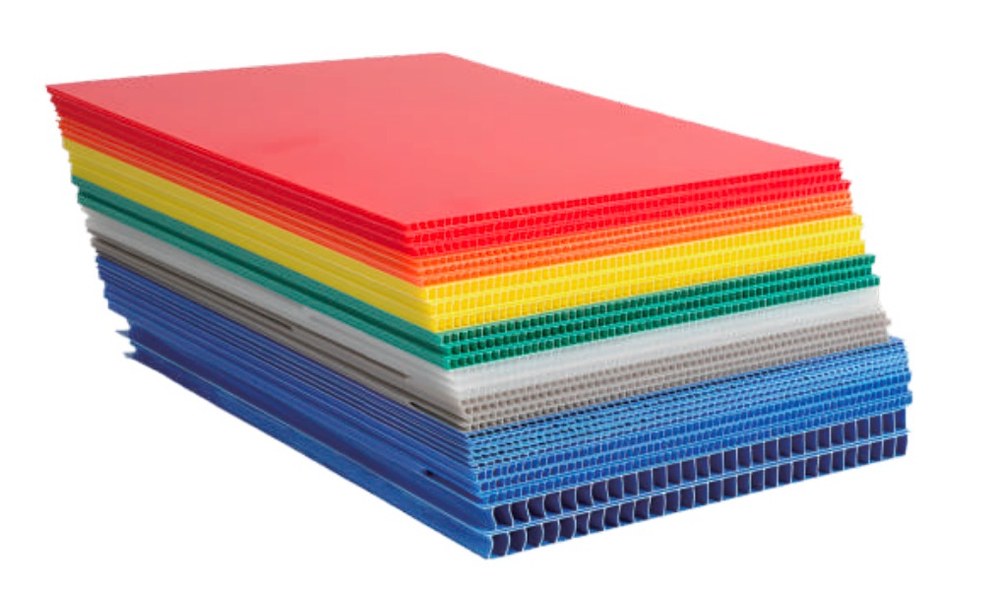
Specify PP corrugated sheet using its thickness, mass per area, construction and the load path in your packaging. Two panels with the same nominal thickness can perform differently. Give suppliers the support geometry, contents and handling conditions, then compare samples and test evidence against the same acceptance criteria.
Define the load and support
Define the load case before comparing quoted panels.
Record the product mass and footprint, stack arrangement, time under load and support surface. Identify whether the contents, box walls, dividers or sheet carry each part of the stack load. A fully supported separator and a panel spanning pallet gaps have different duties; do not assume the stack weight is evenly distributed over either.
Show deck gaps, unsupported spans, contact points and flute direction on the drawing. Compare the assembled package on the intended pallet or support, including foreseeable misalignment. More GSM or a taller profile may change performance, but neither automatically resolves an unsuitable support arrangement.
Agree the filled-package mass, stacking pattern, conditioning, duration and permitted deformation before testing. ASTM D642 covers compression of containers, components and unit loads; ASTM D4577 addresses a sustained load. Select the applicable method and edition with the packaging specialist. A sheet thickness or GSM alone is not a tested payload rating.
Trip count decides the economics
Returnable packaging only pays back if it comes back. Before choosing between a 500 g/m² sheet and a 900 g/m² sheet, estimate how many cycles the packaging will actually complete.
Use quotations for the proposed complete constructions, including closures, printing and tooling. Compare purchase, return transport, inspection, cleaning, repair and replacement costs over measured completed trips. A heavier sheet is not automatically the cheaper lifetime option, and a lighter sheet still needs to pass the agreed handling and load checks.
Track each pilot unit through dispatch, return, inspection and retirement. Record missing units, damage causes and actual reuse counts. Use those observations for the next order rather than promising a fixed number of trips from grammage.
Define the ESD requirements
Establish whether the packed item is ESD-sensitive and which handling stages require protection. Have the ESD coordinator define low-charging, resistance and shielding requirements for the complete packaging arrangement before choosing a grade.
Check direct contact, inner bags or trays, exposed connections and handling inside and outside an electrostatic protected area. An existing inner bag or an enclosed finished product does not by itself settle the outer-packaging requirement. The ESDA control principles distinguish packaging used within a protected area from protection needed outside it.
Ask how the proposed grade achieves its electrical properties and obtain measurements under the specified temperature and humidity. For reuse, agree retesting after the actual cleaning, abrasion, storage and handling cycle. The words permanent or antistatic, and the colour of the panel, do not establish a service life.
Specify the property, acceptance range, test method and edition, electrode arrangement, conditioning and sample locations. Surface resistance is reported in ohms; a surface-resistivity result reported in ohms per square is a different measurement. Confirm that the report and your requirement use the same quantity.
Printing, and why adhesion fails
Agree the sheet, ink or adhesive, pretreatment and cure process with the print supplier. Corona, flame, primer or another qualified process may be proposed depending on the system. Use a measured wetting-tension target supported by that process instead of treating one dyne value as a universal printing requirement.
Record treatment and storage conditions, measure the delivered batch where required, and test adhesion on the printed and fabricated sample. ASTM D2578 concerns wetting tension of PE and PP films and explains that wetting tension alone does not establish ink or adhesive retention. Confirm a suitable measurement method for the actual board surface, plus rub, fold and cleaning acceptance checks.
Compare screen print, digital print and applied labels using the artwork, run size, required durability and quoted setup and unit costs. Trial the actual ink, primer or adhesive on the chosen sheet. A label still needs adhesion and legibility checks under the intended handling and cleaning conditions.
Include printed crease areas in the folding trial. Agree limits for cracking, ink lift and readability after the expected folding and cleaning cycle; move critical text or codes if the qualified layout requires it.
Compare colour and identification options
Request the available stock colours, colour-match tolerance, quantity minimums and lead time for the actual grade. If a dedicated colour run is needed, ask how setup, changeover and colour approval are quoted. Colour availability can differ for electrical, UV or flame-performance formulations.
Where colour is used for identification, compare stock-colour panels with labels or printed codes against the proposed custom colour. Check contrast, readability, label durability and the total quoted cost before choosing.
Specify colour separately from electrical performance. A colour description does not establish a resistance category. Require the grade-specific property and test evidence stated in the ESD specification; the ESD board guide explains the definitions and checks to request.
Fabrication
Obtain separate quotations for drawing preparation, prototype work, cutting or creasing tooling, trials and production. Record tooling ownership, revision control and any repeat-order charges. Compare the process proposed for this design instead of assigning a general tooling price.
Compare rivets, welds, tapes and other proposed joints on serviceability, snagging, cleaning and the qualified assembly strength. Trial the actual joint on the selected grade and layout. A joining method alone does not prove durability throughout the return cycle.
Mark the flute direction and every crease on the blank drawing. Prototype folds in the required orientations, then check closing force, cracking, spring-back and repeated opening. Approve the crease tooling and assembly together rather than requiring one fold direction for every box panel.
The quotation fields that make prices comparable
Send each supplier the same specification: thickness and tolerance, mass per area and tolerance, blank dimensions, flute direction, colour, support and load conditions, fabrication, quantity and packing format. Add the required electrical property and test conditions, flame-test scope, exposure conditions and qualified printing process where applicable.
Ask for the proposed sample, test setup, acceptance criteria and report that support the quoted duty. Resolve missing evidence or a change in construction before accepting a payload, stack or reuse claim.
Request a PP sheet packaging scope review. Send the product mass and footprint, stack and support drawing, handling route, exposure conditions and reuse plan. Include the supplier proposals so the constructions, tests and quotation assumptions can be compared.