
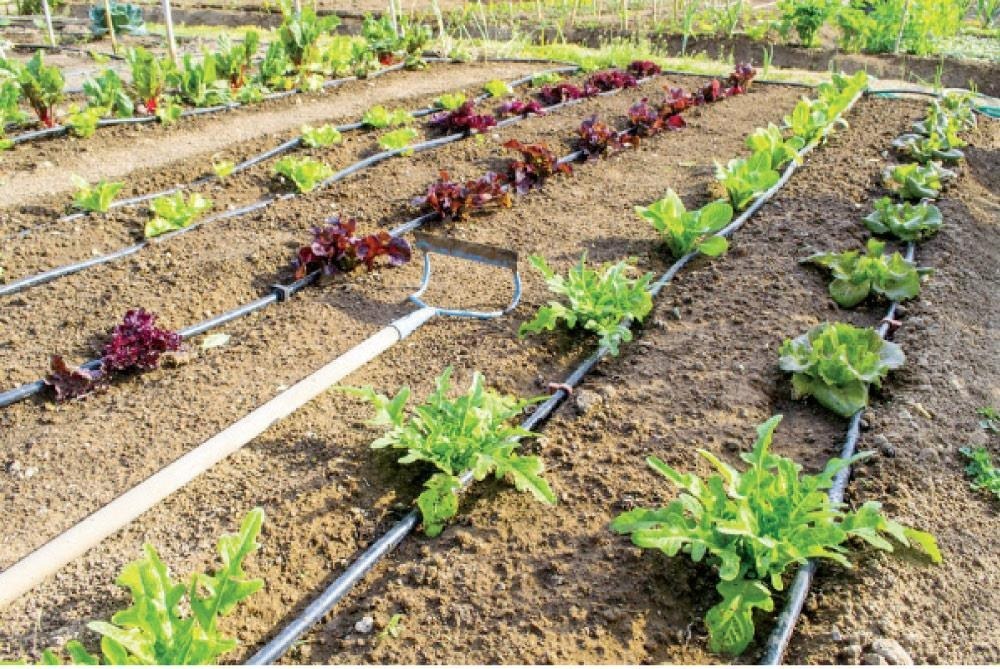
For orchard rows, specify inline-emitter drip tube only after matching the proposed tube to the row layout, irrigation demand and available operating pressure. Give the supplier the required diameter, wall thickness, emitter spacing and flow rate, working-pressure range, roll length and project conditions; then confirm the proposed model against your irrigation design before ordering.
Map orchard rows and emitter placement before choosing a tube
Start with a row schedule, not a preferred tube size. Record row lengths, the number of rows, tree spacing, planting pattern, slope or elevation changes, water source and the planned number and position of laterals. Clarify whether emitters should align with each tree, serve multiple points around a tree, or follow another placement plan. The irrigation designer should determine that arrangement from the crop, soil, water supply and operating schedule.
Separate the tube’s role from the rest of the network. A drip lateral connects to a supply system; mainline sizing and zone layout affect the pressure and flow available at the tube inlet. If the farm main is still being selected, see how to specify PE water supply pipe for a farm main.
For each block or zone, send the designer and supplier the longest row, the number of laterals operating together, elevation changes and the available inlet pressure. These details help establish whether a proposed tube and emitter arrangement fit the layout. Do not assume a model works over a row length simply because its nominal diameter matches.
Match diameter, wall thickness and emitter spacing to the project
Available inline-emitter tube options include outer diameters of 16 and 20 mm, with 12 mm available for greenhouse use; wall thicknesses from 0.6 to 1.2 mm; and listed emitter spacings from 20 to 100 cm, with custom spacing available. Treat these as options to request, not proof that any combination will suit a particular orchard. Review the drip irrigation tube options and ask the supplier to identify the exact proposed model.
Diameter, wall thickness and emitter spacing answer different questions. Diameter relates to the water path and must be checked against flow, pressure and run length. Wall thickness is a tube construction specification, but does not by itself establish service life or suitability for a particular installation. Emitter spacing determines outlet positions along the lateral; confirm that this matches tree spacing and the intended wetting pattern.
| Requirement to specify | What to provide | What to verify |
|---|---|---|
| Orchard layout | Row length, row count, tree spacing, slope and lateral arrangement | Supplier’s proposed model and emitter placement match the design basis |
| Tube size | Outer diameter and wall thickness | Written confirmation for the exact model; clarify any dimensional tolerances and how dimensions are measured |
| Emitter arrangement | Spacing and required flow per emitter | Sample or product documentation confirms the requested configuration and identifies the model |
| Pressure | Planned operating range and inlet conditions | Proposed emitter type and tube are intended for that range; request the applicable performance information |
| Delivery format | Total metres, coil length and required coil count | Coil labels and order documents match the approved specification |
For the effects of spacing, flow and zone sizing on a system plan, see drip irrigation design: flow rate, spacing and zone sizing.
Check emitter flow and operating pressure against the irrigation plan
Listed emitter flow options are 1.0, 1.6, 2.0, 2.7 and 3.8 L/h per dripper. Listed working-pressure ranges are 0.5–3.0 bar, or 0.5–4.0 bar for pressure-compensating models. Confirm which exact flow and pressure specifications apply to the proposed emitter; do not assume every flow option is available in every model or that pressure compensation guarantees suitability for a particular row.
Ask the irrigation designer to check total zone demand and pressure at the relevant points in the system. The supplier should state the specified emitter flow and its test conditions or supporting performance information, including how flow relates to pressure. Request evidence for the exact tube model rather than relying on a general product description. A listed working-pressure range is not, by itself, a design calculation or a guarantee of flow uniformity across your installation.
If the layout includes long runs, elevation changes or differing zone conditions, have the design checked for those conditions before fixing the tube specification. Confirm filtration and water-quality requirements with the irrigation designer and supplier for the water source and emitter design; do not infer clogging resistance from tube dimensions alone.
Specify roll length, material and UV-stabilizer requirements
The listed tube is virgin PE with UV stabilizer and anti-algae carbon black, with coil lengths of 100, 200 or 400 m. Ask whether these options fit the planned lateral lengths and installation method. Shorter coils may reduce the need to handle long lengths on site, while longer coils may reduce the number of joints; compare against the project’s layout, joining plan and handling limits rather than assuming one format is always preferable.
Include the required total metres, coil length, number of coils and destination in the inquiry. State the expected outdoor exposure and storage or installation conditions, and ask the supplier to confirm the proposed material and UV-stabilizer description for the ordered model. Do not treat a material description as a guaranteed service life. If the project has a specified exposure or durability requirement, request relevant product documentation and agree how it will be assessed.
Confirm the proposed specification and sample checks with the supplier
Before placing an order, approve one written specification covering the complete tube configuration. Ask for a labeled sample or another agreed identification method to verify that the delivered model matches the order. Review the exact dimensions, emitter spacing and flow information provided, and agree what documents and acceptance checks will accompany the shipment. A sample check can confirm visible features and stated dimensions; it cannot establish performance for the full irrigation system.
| Purchase-order item | Buyer’s check before approval |
|---|---|
| Outer diameter and wall thickness | Confirm units, measurement basis and agreed tolerances |
| Emitter spacing and flow | Match to the irrigation design and identify the exact emitter model |
| Working pressure | Confirm the intended operating range and request relevant model-specific evidence |
| PE material and UV option | Record the required material description and ask for product documentation |
| Coil length and total quantity | Reconcile the coil schedule with the lateral plan and total metres |
| Destination and project conditions | State delivery destination, installation environment and any project acceptance requirements |
Do not substitute a general statement of conformity for checks against the agreed model and project requirements. If the proposed tube differs in any item, ask for a revised specification and have the irrigation designer confirm the change before approval.
FAQ
What tube diameter should I choose for an orchard row?
There is no single diameter that fits every row. Provide row length, number of operating laterals, emitter flow, elevation changes and available inlet pressure to the irrigation designer and supplier, then confirm the proposed diameter against the system calculation.
How do I choose emitter spacing for trees?
Use the orchard layout and irrigation plan to determine outlet positions relative to each tree and the intended wetting pattern. Share tree spacing and the lateral arrangement, and ask the supplier to confirm the exact spacing offered for the proposed tube model.
Does a pressure-compensating model automatically solve uneven flow?
No. Its stated pressure range does not establish that the complete installation will deliver the required flow uniformly. Have the designer check the proposed model under the project’s actual pressure, elevation and layout conditions, and request performance information for that exact model.
What should I send in a supplier inquiry?
Send row and tree layout, tube diameter, wall thickness, emitter spacing and flow, working-pressure requirements, coil length, total quantity, destination and relevant water or installation conditions. Include an approved sample or model-identification requirement if needed. To discuss requirements, share these specifications along with the irrigation plan or existing project details for review.