
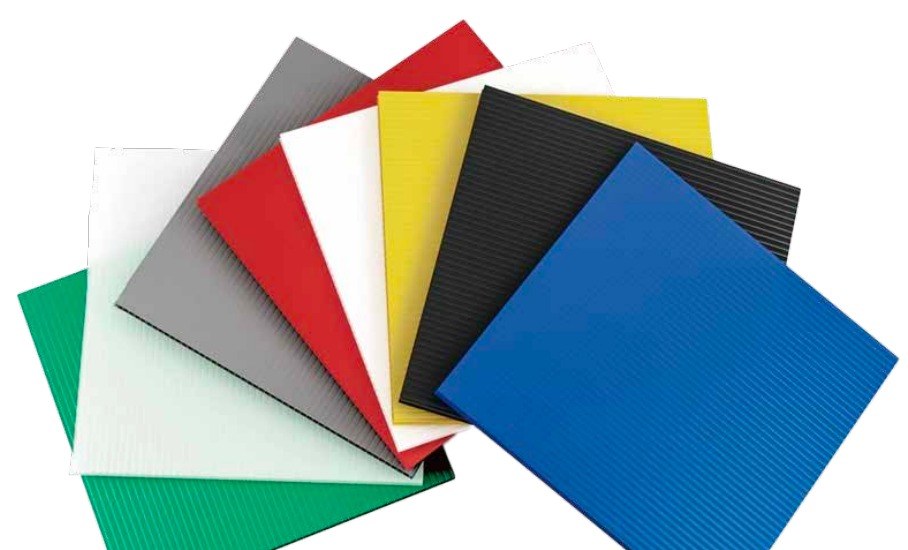
A precise purchase order should define the PP hollow sheet structure, thickness, weight, dimensions, appearance, performance, inspection method and packing requirements. The buyer should also state which samples are approved, how tolerances are measured, what defects are acceptable and which documents must be supplied before shipment.
This checklist helps distributors and project buyers turn a general request for PP sheet into measurable PP hollow sheet purchase order specifications. The checklist below is a template for buyer-defined requirements. Confirm the exact quoted construction, agreed measurement methods and documented limits before putting values in the purchase order.
Define the Sheet Construction and Application
Start with the intended use because the same nominal sheet thickness can perform differently depending on flute geometry, resin grade, surface treatment and loading direction. A sheet used as a temporary advertising board does not require the same construction as a reusable box, pallet layer pad or industrial packaging separator.
State the following items in the purchase order:
- Product name: PP hollow sheet, PP corrugated plastic sheet or PP twin-wall board.
- Resin: polypropylene, with virgin, recycled or blended content clearly identified.
- Material grade: general-purpose, impact-modified, antistatic, flame-retardant or another specified grade.
- Sheet structure: twin-wall, multi-wall or another agreed hollow profile.
- Flute direction: identify the direction of internal ribs relative to the long and short edges.
- Intended use: box conversion, layer pad, separator, sign board, protective sheet or another application.
- Reuse expectation: single-trip, limited reuse or repeated industrial circulation.
- Processing method: die cutting, knife cutting, creasing, welding, stitching, printing or folding.
For technical background on structure and typical failure points, see What Is PP Hollow Sheet? Structure, Grades and Where It Fails. If the buyer is comparing materials, record why PP was selected instead of PE, corrugated fiberboard or solid plastic. The comparison may affect stiffness, moisture resistance, folding behavior and recycling claims; PP or PE Sheet: Choosing Between the Two provides a useful framework.
A PO should identify whether the sheet is supplied as a standard panel or converted product. For cut panels, specify finished length and width, edge squareness, hole patterns and corner treatment. For rolls or continuous sheets, specify roll width, winding direction, core diameter, maximum roll diameter and splice rules.
Specify Thickness, Weight and Dimensional Tolerances
Nominal thickness alone is not enough. A buyer should control thickness, grammage or weight per square meter, finished dimensions and flatness. These values are related but are not interchangeable: a sheet may meet thickness while falling short of weight, or meet weight while having uneven wall distribution.
Enter the required nominal thickness and target weight per square meter for the intended application. Ask the supplier to identify the exact sheet construction and provide the corresponding product specification or approved sample measurements. Record any agreed limits in the PO; do not use a general commercial range as evidence that the quoted product will meet the requirement.
A practical specification table can be written as follows:
| Item | What to state in the PO | Buyer-defined limit and confirmation needed |
|---|---|---|
| Thickness | Nominal thickness and measurement method | Buyer to enter the allowed deviation; supplier to confirm it against the quoted construction and agreed measurement method |
| Weight | Target g/m² and whether it includes treatment or coating | Buyer to enter the permitted weight variation; confirm the measurement area, scale and product-specific capability |
| Length and width | Finished dimensions after cutting | Buyer to enter the dimensional limits; supplier to confirm the cutting method and capability for the specified panel size |
| Squareness | Maximum diagonal difference or corner deviation | Set a measured limit suitable for nesting and box conversion |
| Flatness | Maximum bow, curl or edge lift over a stated length | Define the inspection surface and measurement method |
| Rib pitch and wall profile | Drawing or approved sample reference | Control against the approved construction, especially for fitted parts |
For weight verification, weigh a representative piece with a calibrated scale and calculate grams per square meter from the measured area. Small samples can create larger percentage errors, so use a sample size appropriate to the panel dimensions. More detail is available in How to Calculate PP Corrugated Sheet Weight per Square Meter.
Specify how many locations are measured. A useful method is to measure thickness at the center and near each corner, avoiding damaged edges and cut burrs. Record both the average and the lowest reading. For large sheets, add points along the long edges because cooling and line tension can create variation across the width.
Do not write only “uniform thickness” or “standard tolerance.” Those phrases leave acceptance open to interpretation. State the target, tolerance, instrument type or resolution, sampling frequency and action required when a result falls outside the limit.
Set Color, Surface and Printing Requirements
Color and appearance requirements should be documented with an approved physical sample or a recognized color reference. A color name such as “blue” is not sufficiently precise for repeat orders. State whether color is matched visually, by an agreed color card or by an instrumental value under specified lighting.
The PO should cover:
- Base color and acceptable shade variation.
- Whether both sides must match.
- Gloss or matte finish.
- Surface texture and permitted waviness.
- Black specks, gels, pinholes, streaks and contamination limits.
- Edge quality, burrs and crushed ribs.
- Odor requirements where sheets contact products.
- Surface treatment type, treatment side and minimum treated area for printing.
For printed boards, approve the artwork proof and define print-side orientation, registration tolerance, ink coverage, color sequence and drying requirements. State whether minor variation is acceptable in hidden areas but unacceptable in visible branding areas. Printing performance should be verified on the actual sheet grade, since treatment level, recycled content and surface energy can affect adhesion. See Printing on PP Hollow Board: Surface Treatment, Inks and Adhesion Tests.
A simple print acceptance method is to inspect under consistent lighting, compare with the approved proof and perform an agreed tape or rub test after the specified conditioning time. The PO should identify the test area, tape type or rub method, number of cycles and the allowed level of ink removal. Avoid accepting a vague statement such as “good printing quality.”
If recycled content is requested, state the target percentage, whether it is minimum or nominal, the permitted color variation and whether the sheet is intended for food, pharmaceutical or other regulated contact. Recycled content can affect color, odor, impact behavior and process consistency; the claim should be supported by supplier records or agreed documentation rather than a label alone. Review Recycled Content in PP Packaging: Grades, Trade-offs and Claims before writing this clause.
Write Performance Requirements for Handling and Use
Performance requirements should reflect actual loads, temperature, moisture and handling conditions. Avoid listing every available test. Select tests that relate directly to failure modes in the buyer's operation.
For reusable boxes, dividers and separators, consider:
- Compression or stacking resistance in the specified orientation.
- Flexural stiffness along and across the rib direction.
- Edge crush or local collapse resistance.
- Impact resistance during handling and transport.
- Folding or crease durability where the sheet is converted.
- Resistance to water, common cleaning agents or the buyer's process chemicals.
- Dimensional stability after exposure to the expected temperature range.
- Antistatic or flame behavior where the application requires it.
State the test specimen size, orientation, conditioning time, temperature, load rate and pass requirement. “Strong enough for transport” is not a measurable requirement. A better clause identifies the expected stacking load, stacking duration, safety factor chosen by the buyer and whether the test is performed on a flat sheet, converted box or finished assembly.
Do not transfer a performance value from one sheet thickness or rib direction to another. Hollow profiles are anisotropic, so stiffness and compression behavior can change substantially with orientation. Request supplier test data for the exact construction being quoted, then verify critical values with an independent or buyer-side test when the cost of failure is high.
For packaging applications, define whether cosmetic damage is a failure. A sheet may retain function after minor scuffing while still being unacceptable for a visible retail display. Separate functional requirements from appearance requirements so an inspector can make a consistent decision.
Add Sampling, Inspection and Acceptance Criteria
A complete PO states when inspection occurs, who performs it, how samples are selected and what happens when results fail. Inspection may take place at incoming goods, during production, before shipment or at more than one stage.
Use a written inspection plan with these elements:
- Identify the inspection lot, such as one production run, one material batch or one shipment.
- Define the sampling quantity or sampling level for dimensions, appearance and performance tests.
- Take samples from different bundles, pallet positions and production times when practical.
- Measure dimensions, weight and thickness using calibrated equipment and record the results.
- Compare appearance and color with the approved reference under consistent lighting.
- Test functional properties using the agreed specimen preparation and orientation.
- Record nonconformities by type, quantity, location and severity.
- State whether the lot is accepted, reworked, sorted, replaced or held for buyer approval.
A useful acceptance table separates critical, major and minor defects:
| Defect category | Examples | Buyer-selected PO action to agree |
|---|---|---|
| Critical | Wrong material, hazardous contamination, incorrect product identification | If the buyer specifies a zero-acceptance rule for these defects, hold the lot and investigate under that agreed rule |
| Major | Thickness or weight outside tolerance, crushed ribs, severe warping, failed performance test | Reject, sort or require written buyer approval |
| Minor | Small cosmetic mark outside the visible area, limited shade variation within agreed range | Accept only within a defined quantity or percentage |
These categories are examples, not a universal sampling standard. If the buyer uses an established statistical sampling system, state the standard and inspection level in the PO. Otherwise, agree a practical plan with the supplier before production. The plan should also explain whether one failed specimen rejects the entire lot or triggers additional testing.
Keep a retained reference sample from the approved pre-production batch. Label it with product code, thickness, weight, color, date and approval status. For repeat orders, compare production against both the written specification and the retained sample. This prevents an approved visual sample from becoming an informal substitute for measurable requirements.
Control Packing, Marking and Shipment Documents
Packing requirements protect the sheets after inspection. Specify pallet or bundle dimensions, stacking limits, protective film or wrapping, corner protection, moisture control, strapping method and whether the package must be suitable for container loading. Large sheets should be supported well enough to reduce bowing during storage and transport.
State the following shipment controls:
- Bundle quantity and permitted quantity variation.
- Pallet material, dimensions, entry clearance and maximum gross weight.
- Protection against rain, dust, abrasion and direct sunlight where relevant.
- Bundle orientation and maximum stacking height.
- Product labels on at least two visible sides.
- Lot number, production date, product code, dimensions, thickness, weight and quantity.
- Country-of-origin and handling marks required by the destination.
- Packing list, commercial invoice, certificate of origin or other documents required for the transaction.
- Inspection report and test records for agreed properties.
- Photographs of finished packing before loading, when required by the buyer.
Use consistent item descriptions, units and dimensions across the PO, invoice, package labels and packing list so the buyer and customs representative can reconcile the shipment details. Confirm current import, labeling and documentation requirements with the relevant official authorities and the buyer's customs representative.
Before shipment, ask for a final production summary showing lot numbers, actual quantities, measured weight or thickness results and any deviations. A supplier's internal report does not replace buyer inspection, but it gives the buyer a traceable record and makes later investigation more efficient.
For export packing planning, compare pallet footprint, bundle height, container clearance and allowable loading weight rather than relying only on a nominal bundle count. Ask the supplier to return a proposed packing and loading plan for the specified panel size and shipment quantity.
A concise PO specification can therefore follow this sequence: product construction, application, material grade, dimensions, tolerances, appearance, printing, performance, inspection, acceptance, packing, marking and documents. Ask the supplier to return a signed specification sheet with any exceptions listed line by line. “As quoted” should not override the buyer's written requirements unless the deviation is explicitly accepted.
FAQ
What is the most important PP hollow sheet specification?
The most important specification is the combination of construction, thickness and weight per square meter for the intended load and processing method. Thickness alone does not fully describe stiffness, durability or material quantity.
What tolerance should a buyer request for PP hollow sheet?
Define acceptable thickness, weight and dimensional deviations from the application requirements. Ask the supplier to confirm those limits for the exact sheet construction, panel size and production method, with a written measurement and sampling procedure. Record the agreed limits in the PO rather than assuming a universal tolerance.
How can a buyer verify sheet weight?
Measure a representative sample's length and width, weigh it with a calibrated scale and calculate weight per square meter from mass divided by area. Take samples from multiple bundles or production locations when lot consistency matters.
Should the buyer approve a physical sample?
Yes. Approve a physical sample for structure, color, surface, printing, folding and conversion behavior, while also recording numerical specifications. A sample is useful for appearance and workmanship, but it should not replace measurable tolerances.
What documents should be requested before shipment?
Request the packing list, commercial invoice, agreed origin or compliance documents, inspection report, test records for specified properties and package photographs when required. The exact document set depends on the destination and transaction, so confirm current requirements before loading.
Send Your PP Sheet Purchase Requirements
Use our contact form to share the intended use, sheet construction, required thickness, target weight per square meter, panel dimensions, buyer-defined tolerances, quantity, printing needs and delivery destination. Share a link to the proposed PO specification or drawing and ask the quotation team to confirm the product-specific limits, test documentation, packing plan and any deviations in writing.