
A reliable farm water main starts with a specification that connects the project design to a clearly defined pipe offer. Request the outside diameter, wall thickness, SDR, pressure class, material grade, delivery format, joining details and agreed documentation so suppliers can quote on a comparable basis.
The listed water-supply pipe options include HDPE PE100 or PE80, diameters from Ø20 to Ø110 mm with sizes up to Ø160 mm on request, PN6 to PN16 pressure ratings, and SDR26 to SDR11. These are listed options, not confirmation that every diameter, SDR and pressure-class combination is available; ask the supplier to confirm the exact proposed configuration. Have your project engineer and the relevant authority confirm design values and applicable requirements before purchase.
Map the Route and Operating Requirements
Start with the route and project design. A farm main may include buried sections, exposed sections, valve chambers, pump connections, elevation changes and branches to irrigation zones. These details help the project team define the pipe specification, connections and delivery plan.
Prepare these inputs before requesting quotations:
- Route length, with branches, risers and connection points identified.
- Required flow at the design point and the number of zones that may operate together.
- Pump information, expected operating pressure and elevation differences, as established by the project engineer.
- Burial conditions, crossings, above-ground sections and planned locations for valves, filters and meters.
- Intended water use, including irrigation, livestock or potable supply where applicable.
- Destination, unloading limitations and any preference for coils or straight lengths.
Ask the project engineer which design values and operating conditions must be reflected in the pipe selection, including any pressure changes during system operation. Do not select a pipe size solely from the pump connection. For additional selection context, see the PE pipe diameter and pressure guide.
Match Diameter, Wall Thickness, SDR and Pressure Class
Ask suppliers to show outside diameter, wall thickness, SDR and nominal pressure class together for each proposed pipe size. A diameter alone does not identify the proposed construction. The supplier should confirm which combinations are available and whether they meet the project specification.
The listed water-supply pipe options include:
- Outside diameters of Ø20, 25, 32, 40, 50, 63, 75, 90 and 110 mm, with sizes up to Ø160 mm on request.
- Wall thickness from 2.0 mm to 10.0 mm, depending on diameter and pressure class.
- PN6, PN8, PN10, PN12.5 and PN16 pressure ratings.
- SDR26 to SDR11 configurations.
- HDPE PE100 or PE80, described as potable-water grade.
These are product options, not a design recommendation. Ask the engineer to specify the required diameter, wall thickness or SDR, pressure class and applicable standard. Request the supplier’s proposed combination in writing for every diameter, rather than assuming that every listed SDR and PN rating is offered for every size.
| Purchase requirement | What to state in the request | What to ask the supplier or project team to confirm |
|---|---|---|
| Diameter | Outside diameter for each route section | Confirm the proposed size matches the project design and quotation |
| Wall thickness and SDR | Required value or approved options | Confirm the exact available combination for each diameter and PN rating |
| Pressure class | Required PN rating and the design basis provided by the engineer | Confirm the quoted pipe configuration against the project requirement |
| Material | PE100 or PE80 as specified or accepted by the project | Confirm the proposed grade and its suitability for the intended use with the project engineer or authority |
| Standard | Standard and edition specified by the project, if any | Confirm which standard applies to the proposed model and what supporting documents are available |
| Color | Required color or stripe, if specified | Confirm whether the offered color meets the destination and project requirements |
The product range lists ISO 4427, EN 12201 and GB/T 13663 compliant grades as available. Ask which standard applies to the exact proposed model and request the supporting documents available for that configuration. A general standards statement does not establish that every proposed pipe meets your project requirements. Check current local requirements with the relevant authority.
Choose Coils or Straight Lengths and Confirm Joining Compatibility
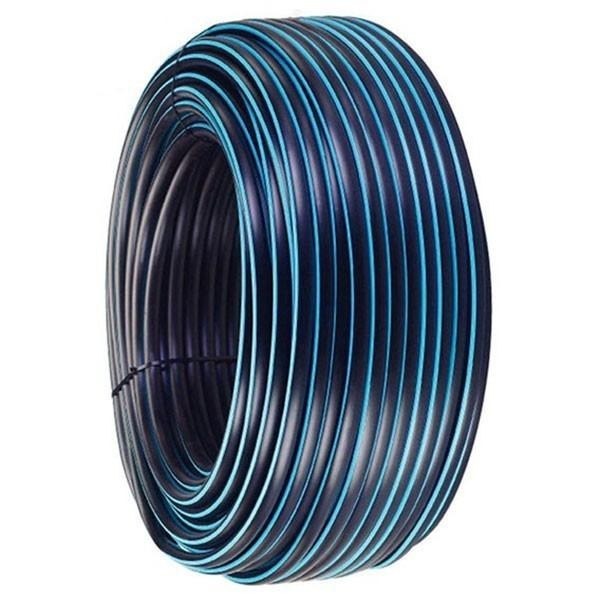
Listed delivery formats are coils of 50 m to 200 m for diameters up to and including Ø63 mm, and 6 m or 12 m straight lengths for larger sizes. Ask the supplier to confirm the available format and length for the diameter and configuration in your request.
The choice between coils and straight lengths depends on the route, transport, unloading, site handling and joining plan. Ask the project team and supplier to confirm whether the proposed format can be handled and installed as planned. Before ordering, clarify package dimensions and weight, lifting arrangements and unloading constraints with the supplier; do not assume these details from the pipe length alone.
State the planned connections and ask the supplier to confirm compatibility with the fittings, valves, flanges and other components selected for the project. Include the following in the request where known:
- Pipe outside diameter, SDR and pressure class at each connection.
- Fitting and equipment specifications supplied by the project team.
- Planned joining approach and any compatibility questions that need supplier confirmation.
- Required pipe-end protection and marking or packing details.
Do not match pipe and fittings by nominal diameter alone. Have the project team confirm the complete connection arrangement.
Specify Material, Color Coding and Documentation
The listed water-supply pipe material options are HDPE PE100 and PE80, described as potable-water grade. State the grade required by the project or ask the project engineer which options are acceptable for the intended service. Do not assume that a listed grade is approved for a particular destination or use without confirmation.
Listed color options include black with a blue stripe, black and custom color; the product description associates black with a blue stripe with potable water. Treat this as a product option, not confirmation that it meets local identification or approval requirements. Ask the authority or project engineer what identification is required and confirm with the supplier whether the requested option is available for the selected pipe configuration.
Before ordering, ask the supplier what documents are available for the exact model and shipment. The project engineer or authority should identify which documents are needed. Topics to clarify may include:
- Product specification showing the quoted diameter, wall thickness, SDR, pressure class and material grade.
- Applicable standard and the model or configuration it covers.
- Batch or lot identification and any material traceability information available.
- Dimensional or test records, if required by the project, and the method and acceptance criteria to be agreed.
- Marking details, production identification and packing information, if required.
These are items to request and agree, not claims that a particular record or marking is automatically included. Confirm document availability and acceptance before order placement. Verify current water-use, construction and import requirements with the relevant authority for the destination.
Agree Checks Before Shipment
For a new diameter, SDR, color or connection arrangement, ask whether a sample or pre-shipment review is available and agree what it will cover. Tie any approval to the exact proposed material, size, SDR and pressure class.
Agree a shipment-release checklist with the supplier and project team before production or loading. It can cover:
- Comparing the approved purchase specification with the proposed production details for diameter, wall thickness, SDR, pressure class, grade and quantity.
- Confirming which markings or identification are required, and how they will be checked against the purchase specification.
- Agreeing any dimensional checks, sampling approach, measuring method and acceptance criteria with the supplier or project authority.
- Confirming coil lengths or straight-length counts, end protection and package details against the agreed order.
- Reviewing the documents agreed for the shipment and resolving discrepancies before release.
- Recording package labels and pipe identification if required by the project team.
These checks should follow the project’s acceptance requirements. They do not replace any inspection or approval required by the project engineer or authority. For comparison with smaller field-distribution products, see the PE irrigation pipe selection guide. Drip tubes and drip tape are separate products; confirm their suitability independently rather than treating them as alternatives to a specified water main.
FAQ
Is PE100 always the correct choice for a farm water main?
Not automatically. The listed water-supply pipe options include HDPE PE100 and PE80, described as potable-water grade. Ask the project engineer to confirm the required grade and configuration for the intended service, and ask the supplier to quote the exact available combination.
Should I order pipe by diameter or by pressure class?
Specify both, along with wall thickness or SDR and material grade. Ask the supplier to confirm the exact diameter, SDR and PN combination offered. The project engineer should verify that it matches the design.
Are coils better than 6 m or 12 m straight lengths?
That depends on the project route, handling, transport and joining plan. The listed formats are coils of 50 m to 200 m for diameters up to and including Ø63 mm, and 6 m or 12 m straight lengths for larger sizes. Confirm the available format and its suitability for the project with the supplier and installation team.
Does a blue stripe confirm approval for potable water?
No. Black pipe with a blue stripe is a listed product option associated with potable water, but that does not establish acceptance for a particular destination or project. Confirm identification and approval requirements with the relevant authority and ask the supplier to confirm the offered configuration.
Prepare the Procurement Brief
Share the route sections, design diameter, required SDR or wall thickness, PN rating, material grade, quantity or total meters, preferred delivery format, connection details, color, destination, unloading constraints and documents required by the project. Include drawings and design information from the project engineer, along with any applicable authority requirements. Then discuss requirements for a quotation based on the specified project configuration.