
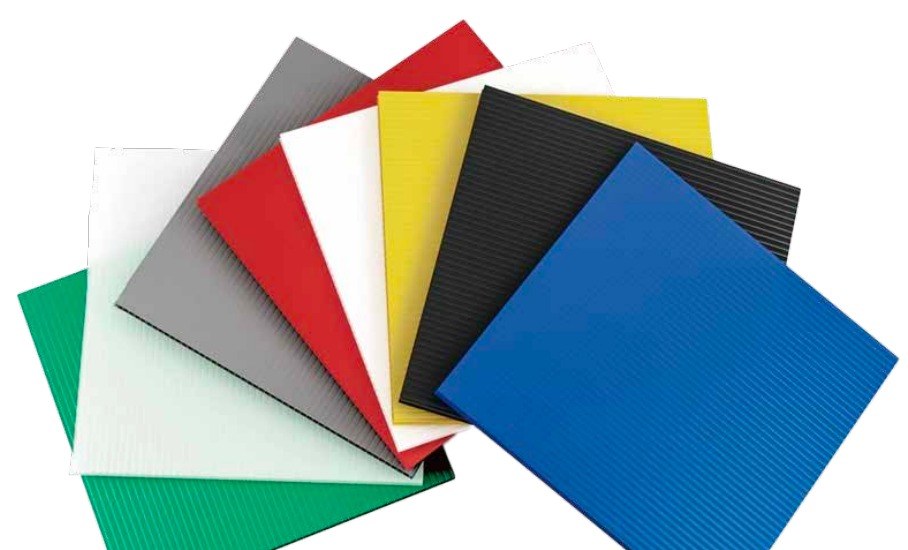
PP corrugated sheet weight per square meter is one of the most useful specifications for buyers because it directly reflects how much material is actually present in the sheet. In many purchasing situations, thickness alone does not tell the full story. By calculating and verifying weight per square meter, buyers can compare quotations more accurately and confirm that delivered sheets match the agreed specification.
Why Weight per Square Meter Matters When Buying PP Sheets
When sourcing PP Corrugated Plastic Sheets, buyers often receive quotations that list thickness, dimensions, color, and application. However, two sheets with the same nominal thickness can have noticeably different weights.
Weight per square meter is important because it affects:
- Sheet stiffness and load-bearing performance
- Packaging durability during transport
- Printing and converting characteristics
- Total shipment weight
- Material consumption and cost comparison
A thicker sheet is not automatically heavier. Manufacturers can change wall thickness, flute geometry, or raw material distribution while keeping the overall sheet thickness similar.
For example, two 4 mm sheets may appear identical when measured with a caliper, yet one sheet may contain significantly more polypropylene material than the other. The heavier sheet may offer greater rigidity, while the lighter sheet may reduce shipping weight and cost.
This is why professional buyers should evaluate thickness and weight together rather than relying on either specification alone.
For a broader understanding of how sheet structure affects performance, see What Is PP Hollow Sheet? Structure, Grades and Where It Fails.
Weight, Thickness, and Flute Structure: What Each Specification Tells You
PP corrugated sheets are built from outer walls connected by internal ribs or flutes. The final weight depends on the amount of polypropylene used in all structural layers.
The three most common specifications are:
| Specification | What It Measures | What It Does Not Tell You |
|---|---|---|
| Thickness | Distance between outer surfaces | Actual material content |
| Weight per square meter | Material mass across a standard area | Exact flute design |
| Density of material | Properties of the resin | Sheet structural layout |
Thickness
Thickness is usually specified in millimeters. Typical packaging and display products may range from approximately 2 mm to 10 mm or more, depending on the application.
Thickness helps estimate stiffness and conversion suitability, but by itself it cannot confirm how much polypropylene is present.
Weight per Square Meter
Weight per square meter is often expressed as:
- g/m² (grams per square meter)
- kg/m² (kilograms per square meter)
This specification provides a direct indication of material usage.
Typical ranges can vary substantially depending on thickness, flute design, recycled content level, and intended application. Buyers should always request the target weight per square meter rather than assuming it from thickness.
Flute Structure
Different flute configurations distribute material differently.
Factors that influence weight include:
- Distance between ribs
- Rib thickness
- Outer wall thickness
- Multi-wall construction
- Reinforcement layers
Because of these variables, thickness should never be used as the sole acceptance criterion in a purchase order.
When evaluating packaging-grade material, it is also useful to review guidance such as How to Choose PP Corrugated Sheet for Export Packaging.
How to Calculate Sheet Weight from a Sample
The most practical way to determine PP corrugated sheet weight per square meter is by measuring a sample and converting the result into a square-meter basis.
Method 1: Weigh a Known Area
Use a calibrated scale and measure the sample dimensions accurately.
Follow this process:
- Measure the sample length in meters.
- Measure the sample width in meters.
- Calculate the sample area.
- Weigh the sample.
- Divide sample weight by sample area.
Formula:
Weight per square meter = Sample weight ÷ Sample area
Example
Assume a sample measures:
- Length: 0.5 m
- Width: 0.4 m
- Area: 0.20 m²
- Weight: 120 g
Calculation:
120 g ÷ 0.20 m² = 600 g/m²
The sheet weight per square meter is therefore 600 g/m².
Method 2: Cut a Test Specimen
Many buyers use standardized square samples.
Common sample sizes include:
- 100 mm × 100 mm
- 200 mm × 200 mm
- 300 mm × 300 mm
Larger samples generally reduce measurement error because corrugated sheet surfaces are not always perfectly uniform.
Inspection Checklist
Before recording results, confirm:
- Scale calibration status
- Accurate dimension measurement
- Flat sample condition
- No excessive dust or moisture on the sample
- Sample taken from a representative production area
Testing multiple pieces provides a more reliable average than measuring a single specimen.
Converting Weight per Square Meter into Sheet or Order Weight
Once weight per square meter is known, estimating shipment weight becomes straightforward.
Single Sheet Weight
Formula:
Single sheet weight = Area × Weight per square meter
Example:
- Sheet size: 1.2 m × 2.4 m
- Area: 2.88 m²
- Weight specification: 700 g/m²
Calculation:
2.88 × 700 g = 2,016 g
Approximate sheet weight = 2.016 kg
Order Weight
Formula:
Order weight = Single sheet weight × Quantity
Example:
- Sheet weight: 2.016 kg
- Quantity: 1,000 sheets
Estimated material weight:
2.016 × 1,000 = 2,016 kg
Actual shipment weight may differ because of:
- Pallets
- Corner protection
- Strapping
- Export packaging materials
- Moisture and environmental conditions
This calculation is useful when planning freight capacity and container utilization. Buyers handling international shipments may also benefit from reviewing Container Loading Guide for Packaging Materials Export.
How to Compare Supplier Quotes on an Equal Basis
One common purchasing mistake is comparing thick sheets from one supplier against lighter sheets from another supplier without converting the data into a common measurement basis.
The most reliable comparison method is to request the following information from every supplier:
| Item | Supplier A | Supplier B | Supplier C |
|---|---|---|---|
| Thickness (mm) | |||
| Weight per m² (g/m²) | |||
| Sheet size | |||
| Virgin or recycled content | |||
| Color | |||
| Tolerance |
Ask for Weight Tolerance
Weight specifications should always include acceptable variation.
Typical production tolerances depend on:
- Manufacturing process
- Sheet dimensions
- Thickness range
- Quality requirements
Instead of simply stating a target weight, ask the supplier to define the acceptance tolerance in the quotation and purchase order.
Check Material Basis
A heavier sheet is not automatically better.
The correct specification depends on:
- Packaging load requirements
- Reusability targets
- Printing needs
- Cost objectives
If recycled-content material is being offered, make sure comparisons are made between equivalent grades and performance requirements. Additional background is available in Recycled Content in PP Packaging: Grades, Trade-offs and Claims.
Request Supporting Documentation
Ask suppliers to provide:
- Product specification sheets
- Internal quality standards
- Weight measurement method
- Sampling procedure
Using a common evaluation basis helps prevent misunderstandings after delivery.
Incoming Inspection: Sampling and Recording Sheet Weight
Incoming inspection provides a practical way to verify compliance before sheets enter production.
Create a Sampling Plan
The exact sampling quantity depends on order size and quality requirements.
The key principle is consistency.
Select sheets from:
- Top of the pallet
- Middle of the pallet
- Bottom of the pallet
- Different pallets when possible
This approach reduces the risk of measuring only the best-looking material.
Measure and Record Results
For each sample, record:
| Inspection Item | Result |
|---|---|
| Date | |
| Purchase order number | |
| Supplier | |
| Nominal thickness | |
| Measured dimensions | |
| Sample weight | |
| Calculated g/m² | |
| Inspector |
Calculate the average result from all tested samples.
If averages remain within the agreed specification and tolerance, the material can usually proceed to the next inspection stage.
Retain Reference Samples
Keeping retained samples can be useful when:
- Quality disputes arise
- Repeat orders are compared
- Performance issues occur later
Reference samples provide a physical benchmark for future comparisons.
Common Measurement Errors and Purchase Order Details
Many disputes over sheet weight are caused by measurement inconsistencies rather than production defects.
Common Errors
The most frequent problems include:
- Measuring dimensions incorrectly
- Using uncalibrated scales
- Calculating area with wrong unit conversions
- Testing sheets after trimming or processing
- Confusing sheet weight with pallet weight
- Comparing thickness instead of weight specifications
Define the Measurement Basis Clearly
Purchase orders should identify:
- Sheet thickness
- Target weight per square meter
- Unit of measurement
- Allowed tolerance
- Sheet dimensions
- Material grade
- Inspection method
- Sampling requirements
Example Specification Statement
A buyer may specify that material must meet:
- Defined sheet dimensions
- Stated thickness range
- Target weight per square meter
- Agreed production tolerance
- Agreed inspection method
The exact values should reflect the application and supplier capabilities.
Clear documentation reduces the chance of disagreements and makes incoming inspection faster and more consistent.
Near the final stage of supplier evaluation, buyers often compare weight results with physical performance tests and packaging trials. The CZJ Wholesale Team regularly recommends documenting both weight and dimensional requirements in the purchase order because those two measurements together provide a much more reliable quality reference than thickness alone.
For buyers sourcing finished packaging products rather than raw sheets, the same principle can be applied to PP Packaging Boxes, where material weight influences strength, durability, and shipment cost.
The CZJ Wholesale Team also recommends maintaining historical inspection records for repeat purchases so future deliveries can be compared against proven specifications instead of relying solely on supplier catalog data.
FAQ
What is the most important specification besides thickness?
Weight per square meter is usually the most useful companion specification because it reflects actual material content and allows fair comparisons between suppliers.
Can two sheets with the same thickness have different weights?
Yes. Differences in wall thickness, flute design, and material distribution can create substantial weight differences even when overall sheet thickness appears identical.
Should incoming inspection use a single sample?
No. Multiple samples taken from different positions in the shipment provide a more representative result and reduce the impact of localized variation.
Is a heavier sheet always better?
Not necessarily. The best sheet is the one that meets the required performance level, handling needs, and cost target for the intended application.
What should be written in the purchase order?
The purchase order should define thickness, weight per square meter, dimensions, tolerance, material grade, and the inspection method used for acceptance.