
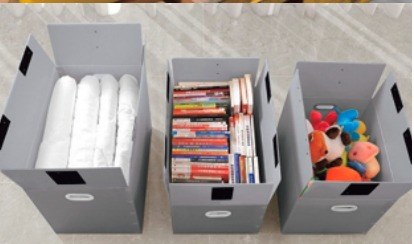
To specify divider cells for a custom PP hollow-board box, start with the parts and how they will be packed—not just the box’s outside dimensions. Give the supplier measured part details, a dimensioned layout and the conditions the packed box must handle, then confirm the design with a representative sample.
Start with the product and packing arrangement
Describe each part that will go in the box, including its shape, orientation and any features that must not touch another part or the box wall. Record the maximum and minimum dimensions of the parts you expect to pack, and note fragile, finished or easily scratched surfaces. If parts vary by model or batch, identify those differences rather than designing around a single ideal specimen.
Sketch the intended arrangement: number of rows and columns, part orientation, and whether parts sit upright, lie flat or nest. Note how operators load and remove them, whether the box is transported assembled or folded, and whether any covers, pads or other inserts are included. These details help clarify whether each cell needs to locate a part, keep parts apart, or do both.
The PP packaging boxes offer describes custom box sizes and accessories including dividers. Confirm the proposed box structure, divider material and included components for your order; do not treat a box material or thickness as proof of fit or protection.
Set cell dimensions from the actual parts
Measure the part’s largest in-use envelope, including protrusions, tabs or features that affect insertion. Then agree how much clearance is needed for loading, removal and expected variation. There is no universal clearance that suits every part: a close fit may locate an item but make loading difficult, while excess space may allow movement. Set the target with the part and packing process in mind.
Dimension the clear opening of each cell, not only the divider panel or the distance between divider centerlines. Account for material thickness, folds, seams, intersections and attachment features that reduce usable space. State whether dimensions are nominal or minimum clear dimensions, where they are measured, and what tolerance applies. Ask the supplier to flag any dimension that cannot be held with the proposed construction before approving a drawing.
For parts with irregular outlines, add a simple plan view or a drawing with the critical contact points marked. If the parts must be separated at particular surfaces, identify those surfaces and the permitted contact areas. Ask for the supplier’s proposed divider layout to show cell openings and the orientation of any flutes or folds.
Specify divider construction, attachment and included components
Identify the requested PP hollow-board grade or ask the supplier to propose one for review. Specify sheet thickness and weight or grammage if these are part of your purchase requirement, but do not use them alone to infer cell load capacity or service life. PP hollow sheets are offered in a range of thicknesses and weights; the PP hollow sheet specifications and checks can help frame the material questions to confirm.
Describe how the divider should be made and secured: for example, folded or slotted panels, joined intersections, or attachment to the box. Confirm the proposed joining method, edge finish and whether panels are removable. State the flute direction where relevant, and request a drawing or sample if it affects the layout. Do not assume a particular process, board thickness or attachment method will work without checking the assembled design.
| Specify | What to record | How to verify |
|---|---|---|
| Cell openings | Clear width, length and height; measurement points; tolerances | Measure the sample openings and compare them with the approved drawing |
| Part fit | Part models, critical dimensions, orientation and required clearance | Load the actual parts and check insertion, removal and contact points |
| Divider construction | Material, thickness or weight requirement, flute direction, joints and attachment | Inspect the sample and compare its construction with the agreed specification |
| Complete pack | Box, dividers, lid, pads and other included components | Confirm the sample contains every component included in the order |
| Handling conditions | Loading method and the intended handling or transport checks | Test the complete packed sample using agreed conditions and record any movement or damage |
Check fit, loading and handling with a sample
Review a sample made to the proposed layout before authorizing the production specification. Use the actual parts, or representative parts whose dimensions and features have been checked against the production items. Confirm that parts enter and leave without forcing, that the intended separations are maintained, and that the divider does not obstruct closing the box or fitting other components.
Test the assembled, loaded box under the handling conditions relevant to your operation. Agree what those checks involve before the sample review—for example, the defined loading procedure, handling steps and inspection points. Record whether parts shift, contact one another or show damage, and whether dividers move, disengage or deform. A material description or short-term check of a divider panel cannot establish the performance of the complete packed box.
If the sample fails, record the observed issue and request a revised layout or construction. Recheck the complete assembly after changes; adjusting one cell can affect neighboring openings or the fit of the box components.
Record the approved layout and acceptance criteria
The purchase specification should make the approved sample reproducible. Attach a dated, revision-controlled drawing and state the box model, divider layout, material requirements, dimensions and tolerances, construction details, and all included parts. Identify which dimensions are clear openings and which are panel or overall dimensions. Include the part drawing or the agreed maximum part envelope and loading orientation.
Write acceptance criteria as checks that a buyer and supplier can both perform. Define which sample or production units will be checked, the measurement points, the fit conditions and the result that counts as acceptance. Keep a record of the approved sample and any agreed deviations. If product dimensions, box construction or packing method change, review whether the layout and acceptance checks still apply.
For a production order, make quantity and any required sample approval a written condition of the order. The PP packaging boxes product information lists a minimum order quantity for that offering; confirm the proposed model and order terms directly rather than assuming they apply to every configuration.
FAQ
Should divider cells match the part’s exact dimensions?
Not automatically. Exact-fit openings may make loading difficult or fail to accommodate part variation, while oversized openings may allow unwanted movement. Agree the required clearance from actual part dimensions, orientation and loading method, then check it using a sample.
Does choosing a thicker PP hollow board guarantee stronger dividers?
No. Thickness alone does not establish the performance of the assembled divider system. Construction, flute orientation, cell geometry, joints, attachment, payload and handling conditions all matter. Specify these details and evaluate the complete sample against agreed criteria.
What should I send for a divider-cell quotation or layout review?
Send part drawings or measured dimensions, the intended arrangement and quantity per box, the required clear openings, box dimensions, material preferences, handling conditions, destination and any existing project drawing or sample. Close with the agreed acceptance checks and identify components that must be included.
For a project brief, share the box and divider specifications, quantity, destination, part drawings or measurements, packing arrangement, and any existing project details. Use discuss requirements to describe the proposed layout and sample acceptance criteria.