
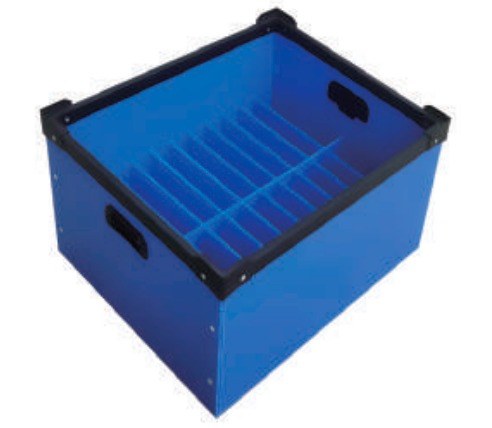
PP hollow board can be considered for separators, edge protection or other parts of photovoltaic module packaging. Select it within a complete shipping design that follows the module manufacturer's handling and support instructions. No generic sheet grammage, corner protector or packing orientation proves protection for every module.
Start with the exact module and shipping unit
Obtain the module model, dimensions, mass, frame or edge construction, glass and rear-surface arrangement, approved support locations and restrictions on lifting or stacking. Modules differ; do not assume each is a framed glass panel that can carry load along any edge.
Record modules per shipping unit, pallet and outer-pack dimensions, restraints, handling equipment, route and storage conditions. Show the load path from the modules through the supports to the pallet. Identify where packaging may touch the module and where contact is prohibited.
| Packaging component | Drawing or specification | Risk to check |
|---|---|---|
| Edge or corner protection | Contact area, retention and permitted restraint load | Local pressure, movement, crushing and abrasion |
| Separator | Contact faces, thickness, geometry and cleanliness | Rubbing, trapped particles, contact marks and local load |
| Pallet and supports | Approved support positions and handling interfaces | Deflection, tine contact, load transfer and instability |
| Outer restraint | Straps, wrap, guides and approved tension or method | Frame distortion, shifting, release and access damage |
Check surfaces and formulation
Trial the finished separator or protector against the actual module contact surfaces under the proposed pressure, movement and environmental conditions. Agree cleanliness and surface-defect limits, storage, handling and inspection. Evaluate abrasion and transfer of colour, additives, adhesive or residue where relevant.
Recycled content does not automatically make a separator unacceptable, and a virgin contact layer does not automatically qualify it. Assess the controlled formulation, surface quality and contact trial. A co-extruded structure may be an option, but it still needs evaluation as the actual finished sheet.
Confirm that the separator stays in its designed position and does not create a concentrated contact load or interfere with approved supports. Do not add perforations, shorten a sheet or change an edge detail simply to encourage airflow; those changes can alter support, restraint and protection.
Approve the orientation and stack arrangement
Use the module manufacturer's approved transport orientation and packaging design. Neither horizontal nor vertical shipment is universally acceptable. The relevant load paths depend on the frame, supports, contact geometry and whether stack loads bypass the modules or pass through them.
A proposal to change orientation, module count, pallet footprint or stack height requires a reviewed design and an appropriate qualification plan. Container fill is calculated after the protection and handling arrangement is approved. A nominal container height or the bottom module's apparent strength cannot establish the allowed stack.
Qualify the complete shipping package
IEC 62759-1:2022 covers simulation of transport of complete PV module package units and subsequent environmental effects. Its public scope does not establish that a particular PP sheet or proposed pack has passed. Agree the applicable edition, test sequence, samples and acceptance with the module owner and test provider.
Keep the tested module, pallet, separators, restraints, outer protection and assembly instructions identifiable. Review module condition and the specified performance checks before and after the sequence, using the agreed methods. An intact outer box or the absence of visible glass breakage alone is not evidence that the modules have no internal damage.
Record impact, vibration, compression or other relevant hazards in the chosen test plan rather than claiming that transport damage is almost always an edge or corner event. Packaging and handling procedures work together; qualification addresses specified conditions and does not authorize arbitrary drops, fork contact or an altered loading arrangement.
Include storage and route conditions
Define temperature, humidity, dwell time and condensation exposure from the intended route and storage, using relevant records or an agreed qualification profile. There is no universal container-temperature assumption that proves the design. Evaluate sustained deformation, joint or adhesive changes, retained moisture and contamination under the specified conditions.
Preserve drainage, ventilation and protective barriers required by the approved design. Confirm unloading, opening and removal procedures with the consignee, including how the pack stays stable as modules are removed.
Request PV packaging sample review. Send the module drawing and handling instructions, shipping-unit layout, approved contacts and supports, orientation, restraint, route, acceptance criteria and quantities. Review PP sheet and packaging materials as components of the complete qualified shipping unit.