
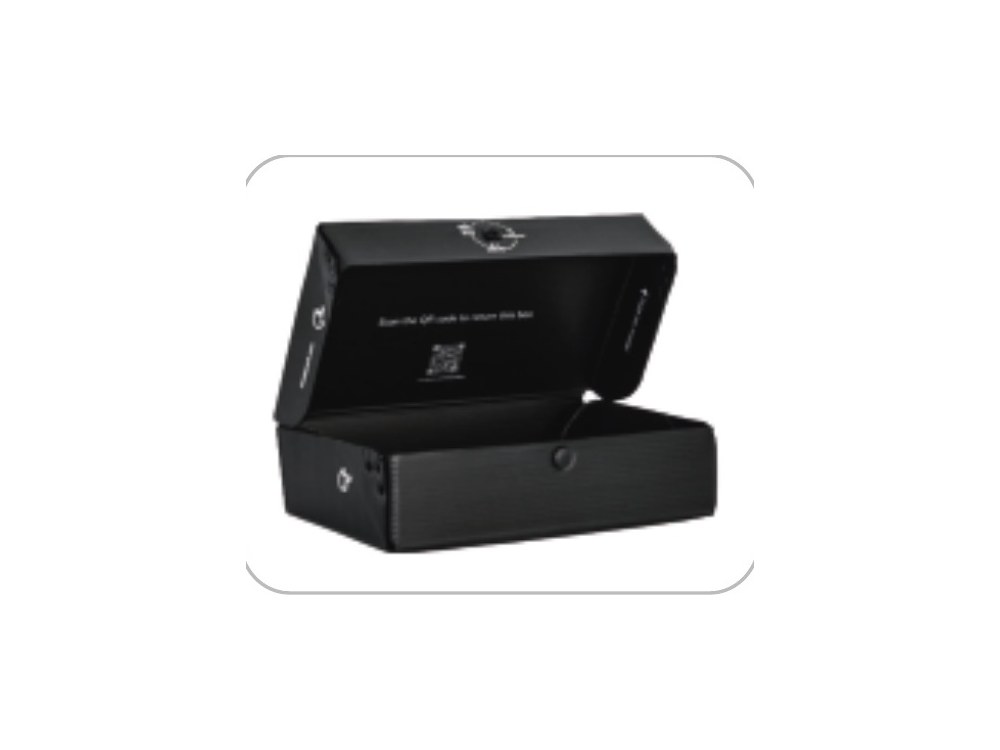
Compare a returnable courier box with a single-use carton using completed deliveries, the return process and the actual handling duty. The reusable system needs a defined collection route, inspection and cleaning process, replacement plan and carrier-compatible package. A lower cost per delivery must be demonstrated for that system.
Obtain the purchase and tooling quotations for each construction, plus the costs of return freight, handling, inspection, cleaning, repairs and losses. Record which costs are charged per dispatch, per return, per unit or per batch so the alternatives use the same accounting basis.
Where the break-even actually sits
Use a clearly defined calculation. As a hypothetical example only, assume a reusable box costs USD 12, each completed delivery-and-return cycle costs another USD 0.50, and one new carton costs USD 1.50 per delivery. With no loss or other costs, reusable expenditure after N deliveries is 12 + 0.50N and carton expenditure is 1.50N. They are equal at 12 completed deliveries; the reusable option becomes cheaper from the 13th. These inputs are assumptions, not CZJ quotations or market prices.
| Completed deliveries | Reusable total at assumed costs | New-carton total at assumed costs | Carton total minus reusable total |
|---|---|---|---|
| 8 | USD 16 | USD 12 | USD -4 |
| 12 | USD 18 | USD 18 | USD 0 |
| 20 | USD 22 | USD 30 | USD 8 |
At 20 completed deliveries the assumed reusable cost is USD 22 / 20 = USD 1.10 per delivery. Replace the inputs with actual quotes and pilot records, including tooling, collection, labour, failures, replacements, taxes and financing where applicable. A truck already making the return route does not make space, handling or collection free. If recurring reusable cost is at least the single-use cost, this simple model has no positive payback from reuse alone.
For home delivery or another open network, price the actual collection arrangement and measure how many units return in usable condition. Include failed collections, customer handling, return labels, tracking and retirement. Calculate the result for the route before relying on either a saving or a loss.
Qualify the complete box, including lid, hinges, buckles, joints and label carrier. Define opening and closing, handling, cleaning and stack tests using the intended contents. Record failure modes and the repair or retirement rule instead of promising lifetime from the panel alone.
Grammage against handling
Select grammage and geometry through the agreed payload, stack, support and handling tests. Measure the tare mass of the complete box and compare its effect on the carrier's actual chargeable-weight calculation. There is no universal GSM threshold that establishes courier-box capacity or economy.
Obtain the carrier or sorting operator's accepted size, shape, stiffness, closure and label-placement requirements. Check protrusions, snagging and scan orientation using a representative packed box in a trial. A flush closure can be helpful, but it does not by itself prove compatibility with every sorting line.
Labelling that survives the wash
Choose the identification system together with the printing or label supplier. Agree scan quality, removal of obsolete routing labels, cleaning conditions and replacement. Compare these options on the finished box:
- Label pocket. Trial the seam, insertion and retention of the card, protection from water or dirt, and any snagging. State who replaces the routing card on each trip.
- Direct print. Qualify the sheet, pretreatment, ink and curing process. Check adhesion and barcode readability after the specified folding, rubbing and cleaning cycle; a dyne value alone is insufficient.
- Applied label. Trial the actual adhesive and face stock on the chosen surface. Define peel, wash, abrasion and scan acceptance conditions, plus when an unreadable or damaged label must be replaced.
When to stay with carton
Check these operating conditions before paying for production tooling:
- Variable parcel sizes. Compare the required fleet of footprints, empty space, storage and handling with the single-use alternatives. Confirm how unusual orders are packed before assuming a standard reusable size fits the network.
- Cross-border movements. Quote return transport and confirm the applicable declaration, tax and tracking arrangements with the relevant representatives. Establish whether the units will return, circulate locally or have another agreed recovery route.
- Contamination. Assess the packed goods and specify cleaning, inspection and retirement criteria. Where safe, effective cleaning cannot be demonstrated for the actual contamination, evaluate a suitable liner or another packaging system.
Run a pilot on the proposed lane and record completed deliveries, return time, missing units, damage, cleaning effort and carrier exceptions. Compare cost per completed delivery against the same service requirement before expanding the fleet.
Request a returnable-box trial brief. Provide parcel dimensions and mass, carrier and sorting requirements, return route, cleaning process and current packaging quotes. We can help identify the prototype, cost assumptions and acceptance checks needed for a comparable proposal.